Discover the “Hachioji Matsuri Festival”
portable Shinto shrine (mikoshi) procession

Japan Heritage “Soto Monogatari”
and the “Hachioji Matsuri Festival”


Hachioji Festival

From Edo to Reiwa —
the Living Traditions of the “Kami no Matsuri” and
“Shimo no Matsuri” Festivals

Nurtured through the shared history of Hachioji—the “Mulberry Capital (Soto)”—and Mount Takao, the Japan Heritage story “Mount Takao, a Sacred Mountain Filled with Spiritual Energy: The Soto Story Woven by People's Prayers” speaks of the area's rich culture and traditions. One of the cultures at its heart is the “Hachioji Matsuri Festival,” the beloved summer tradition of Hachioji. Drawing approximately 800,000 visitors and widely known as one of the Kanto region's foremost float festivals, the “Hachioji Matsuri Festival” is positioned within “Soto Monogatari” as the Japan Heritage cultural property “Kami no Matsuri and Shimo no Matsuri Festivals (Hachioji Matsuri Festival).”

Rooted in the vitality of Hachioji, which once flourished through sericulture and silk weaving, the “Hachioji Matsuri Festival” is alive with its people's spirit of cooperation and faith—an indispensable symbol of the development of Soto-Hachioji.

Japan Heritage Cultural Properties
that Color the “Hachioji Matsuri Festival”

Cultural Properties

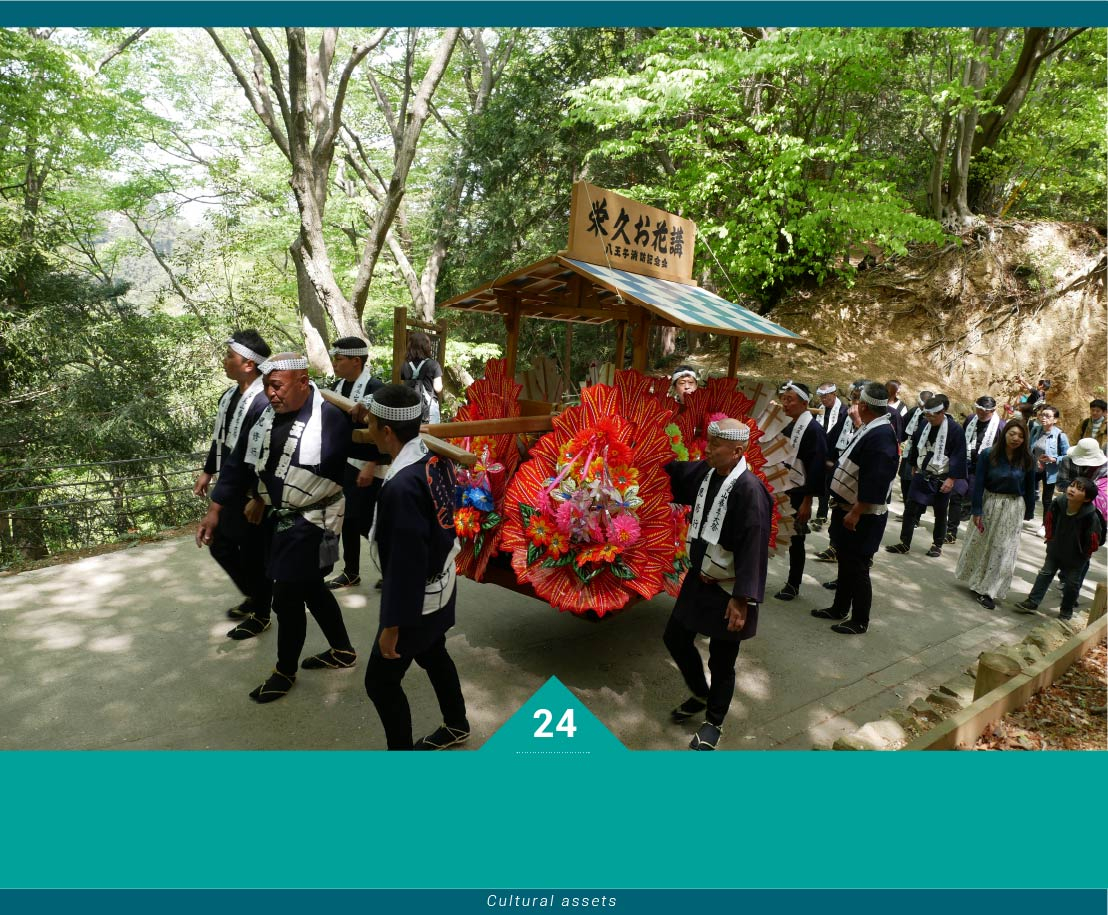
The cultural properties of Japan Heritage “Soto Monogatari” include a variety of performing arts, rites, and festivals that color the “Hachioji Matsuri Festival,”
handed down to the present day.

Roots Reaching Back to the Edo Period:
the “Kami no Matsuri” and “Shimo no Matsuri” Festivals


Origin of the Festival

01

Today's “Hachioji Matsuri Festival” is the union of two shrine festivals whose records date back to the Edo period.

With National Route 16 dividing central Hachioji into east and west, the festival of Taga Shrine in the western area (Upper District) came to be called the “Kami no Matsuri,” and that of Hachiman Yakumo Shrine in the eastern area (Lower District) the “Shimo no Matsuri.” For over 300 years since the Edo period, the two shrines' rituals and portable Shinto shrine (mikoshi) processions have been held, with parishioner neighborhoods parading their floats.

The Hachioji Citizens' Festival, first held in 1961, was renamed the “Hachioji Matsuri Festival” in 1968, after the Upper and Lower districts' float parades joined the 1966 citizens' festival marking the 50th anniversary of the city's incorporation. Float parades and portable Shinto shrine processions have continued ever since, growing into the festival's present content and scale.

Though its form has changed with the times, the history of the floats and the tradition of the portable Shinto shrine processions—the pride of each neighborhood—are still carefully handed down today.

Magnificent “Dashi” Floats

Magnificent “Dashi” Floats


Dashi Float
Magnificent “Dashi” Floats

02

02

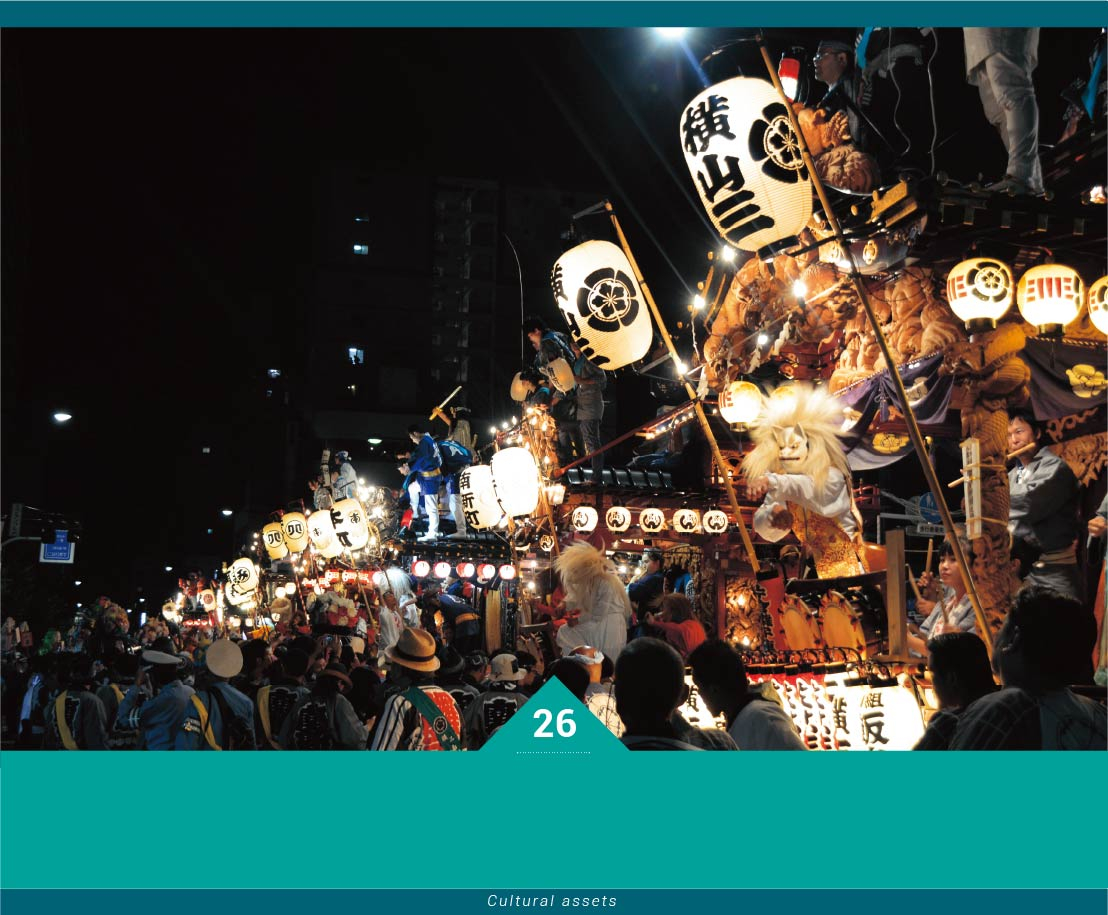
At the “Hachioji Matsuri Festival,” said to be one of the Kanto region's finest float festivals, 19 floats adorned with exquisite carvings make their appearance.

In the late Edo period, against the backdrop of Hachioji's prosperity, the neighborhood associations vied with one another in building ever more magnificent floats.

In the daytime parades you can view the fine carvings up close, while at night the floats, lit by lanterns, create a truly enchanting scene. The night parades and tsuji-awase (crossroad gatherings), with a character all their own, are well worth seeing.

Float of the Upper District
Upper District

Grand Float Gathering at Hachiman-Otsuji

Location
Hachiman-Otsuji (Hongo-Yokocho intersection)
Date & Time
August 9, 2026 (Sun.), from 18:40
Float of the Lower District
Lower District

Lower District Float Gathering (Tsuji-awase)

Location
Yoka-Tsuji (Yume Art Museum West intersection) and Yokoyama-Tsuji (Yokoyamacho Post Office intersection)
Date & Time
August 9, 2026 (Sun.), 18:00 to approx. 18:20

Lower District Nenban-okuri (Handover of the Year's Duty)

Location
Fuda-no-Tsuji (Yokamachi intersection)
Date & Time
August 9, 2026 (Sun.), 20:00 to approx. 20:20
Portable Shinto shrine (mikoshi) procession Portable Shinto shrine (mikoshi) procession

The Mighty Portable Shinto Shrine (“Mikoshi”) Processions


Mikoshi Procession

03

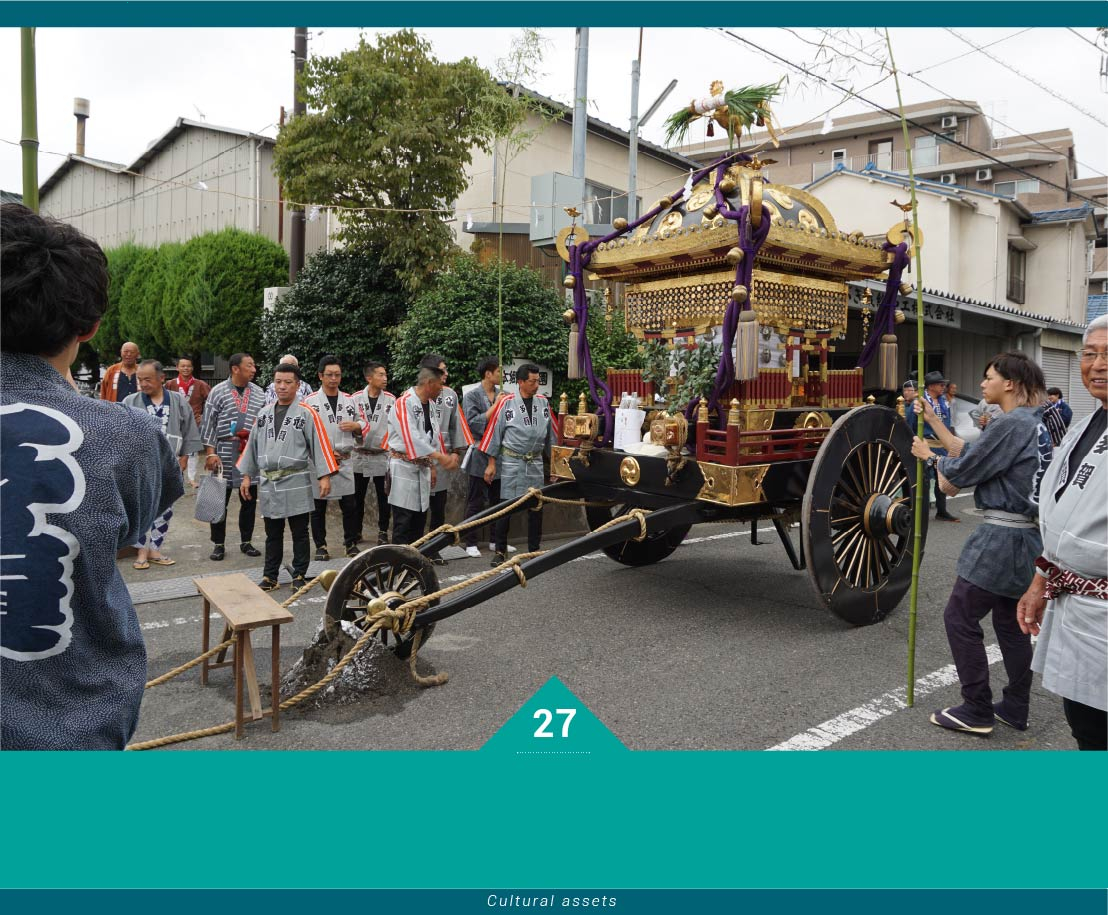
One of the highlights of the “Hachioji Matsuri Festival” is the processions of the main portable Shinto shrines of Taga Shrine and Hachiman Yakumo Shrine.

Taga Shrine's portable Shinto shrine, affectionately known as the “Senkan Mikoshi,” is among the largest in the Tama region, weighing about 3 tons and standing about 2.5 meters tall. Its valiant procession, borne by some 1,600 carriers, is a breathtaking spectacle that symbolizes the festival.

Hachiman Yakumo Shrine's portable Shinto shrine, meanwhile, was rebuilt in 1989; its carriers, clad in matching light-indigo (asagi) happi coats, parade with great spirit along the Koshu Kaido.

Procession of Taga Shrine's “Senkan Mikoshi”
Upper District

Taga Shrine's “Senkan Mikoshi”

Location
Upper District area
Date & Time
August 9, 2026 (Sun.), 15:00–17:00
Procession of Hachiman Yakumo Shrine's Portable Shinto Shrine
Lower District

Procession of Hachiman Yakumo Shrine's Portable Shinto Shrine

Location
Lower District area
Date & Time
August 9, 2026 (Sun.), 14:00–17:00
Kiyari songs

“Kiyari Songs” that Set the Floats
and Portable Shinto Shrines in Motion


Kiyari Song
Kiyari songs

04

04

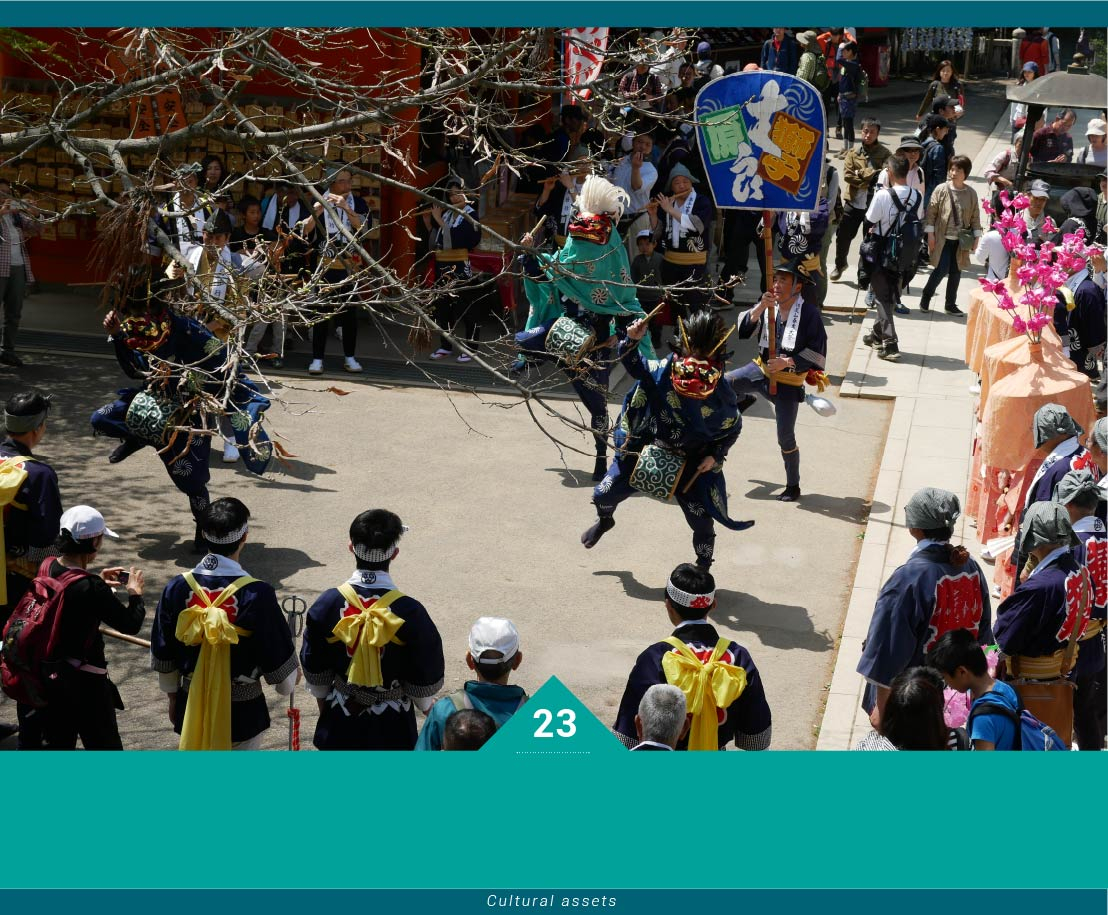
The magnificent floats and portable Shinto shrines are the stars of the festival—and at the very moment they begin to move, the kashira (tobi—traditional scaffolding craftsmen) raise the “Kiyari” chant.

Kiyari are work songs for keeping everyone in step; they give the festival its rhythm and unite people's hearts as one.

Local tobi craftsmen have supported the festival since the Meiji era. Beyond singing kiyari, they handle every vital role—from the delicate work of hanging lanterns on the floats, to directing the raising of the puppet floats, to steering the floats themselves.

Kiyari songs
Hachioji Geisha Hachioji Geisha

Keeping Alive the Glamour of
the Weaving Town:
the “Hachioji Geisha”


Hachioji Geigi

05

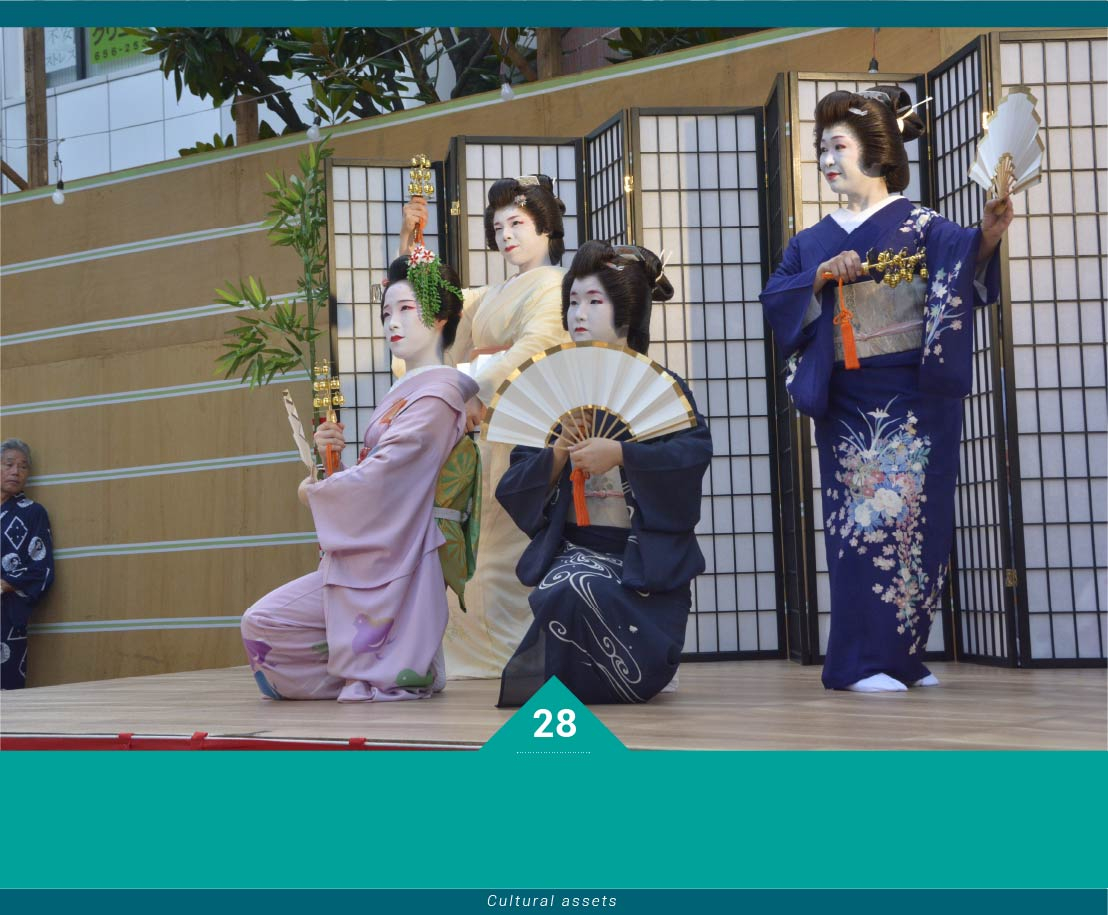
Hachioji once flourished through sericulture and silk weaving—and the “Hachioji geisha” embody that glamorous history.

In 2004 they made their festival debut with a newly built “niwaka” stage-float. In tekomai costume they lead the float in step with the matoi standards and Kiyari chants, while the jikata musicians perform beautiful shamisen and drum music; on the festival eve (yoimiya), they captivate audiences with graceful dance.

Taisho-era records, too, show geisha leading the festival procession—a truly iconic presence carrying on the refined traditions of Hachioji, the weaving town.

Yoimiya (Festival-Eve) Dance

Location
Nishi-Hoshasen U-Road, Nakacho Park
Date & Time
August 7, 2026 (Fri.), 18:30–19:00
Hachioji Geisha
Three-lion dances (Sanbiki Shishimai)

Meet the Three-Lion Dances “Sanbiki Shishimai”
at the Hachioji Matsuri Festival


Sanbiki Shishimai
Three-lion dances (Sanbiki Shishimai)

06

06

Across Hachioji, sanbiki shishimai—three-lion dances long dedicated in prayer for bountiful harvests, protection from evil, and good health—are still cherished and handed down in their communities today.

At the “Hachioji Matsuri Festival,” the Hachioji lion dances were first performed in 1979. This year, the Miyamacho Sasara Shishimai Preservation Society, the Yotsuyamachi Ryuto-no-Mai Preservation Society, and the Hikawa Shrine Shishimai Preservation Society perform the traditional dances handed down in their communities at the Ekimae Terrace on Nishi-Hoshasen U-Road.

Location
Nishi-Hoshasen U-Road, Ekimae Terrace
Date & Time
August 9, 2026 (Sun.), 16:00–18:00
Three-lion dances (Sanbiki Shishimai)

*Different from the lion dances performed to festival hayashi music.

The Soto story and the Hachioji Matsuri Festival, passed down through generations The Soto story and the Hachioji Matsuri Festival, passed down through generations

The Soto Story, Passed Down,
and the Hachioji Matsuri Festival


Passing on the Story

07

The traditions of the “Kami no Matsuri” and “Shimo no Matsuri” Festivals, handed down unbroken since the Edo period, have come together with the people's hopes through changing times, carried on into today's “Hachioji Matsuri Festival.”

What Japan Heritage “Soto Monogatari” relates is not a mere record of history, but culture itself—protected, nurtured, and passed on to the next generation by the people of this land.

The “Hachioji Matsuri Festival” gathers the traditions and culture nurtured in Soto-Hachioji—floats, portable Shinto shrines, geisha, lion dances and more—a festival that embodies the pride and vitality of the community.

It may truly be called the living embodiment of Japan Heritage “Soto Monogatari”—and its charm will be passed on, unchanged, to the future.

The Soto story and the Hachioji Matsuri Festival, passed down through generations
Cover of the 2026 Hachioji Matsuri Festival pamphlet

Hachioji Matsuri Festival Pamphlet — 2026 Edition

Includes a venue map and the schedule of every event. Click to start the download.

PDF icon Download High-Res PDF (18.3MB)

For printing and similar uses (Wi-Fi connection recommended)

PDF icon Download Light PDF (3.3MB)

For viewing on the go

References

  • *Shin Hachioji Shishi* [New Hachioji City History], Folklore Volume (edited by the Hachioji City History Editorial Committee; published by Hachioji City)
  • *Soto Hachioji Dashi Matsuri no Rekishi* [History of the Float Festivals of Hachioji, the Mulberry Capital] (supervised by Etsuo Aihara; edited and published by the Hachioji City Local History Museum)
  • *Hachioji Jiten* [Hachioji Encyclopedia], Revised Edition (edited by the Hachioji Jiten Society; published by Katakura Shoten)
  • Official Hachioji Matsuri Festival website
Japan Heritage “Soto Monogatari” Audio Guide app icon

Enjoy the Hachioji Matsuri Festival even more with the “Japan Heritage Soto Monogatari Audio Guide” app!
(*Information as of 2026)

When you download the app,

  • Enjoy a digital stamp rally around all 19 kaisho (neighborhood festival stations).
    Win an official Hachioji Matsuri Festival tenugui hand towel in a prize draw.
  • When you approach a float on site, you can watch a commentary video about it.

Download the app here
(please access from a smartphone)